
If you spend enough time on social media, you’ll probably hear one of two extreme messages about menopause and weight loss.
One side says: “Calories in versus calories out is all that matters. Just eat less and move more.”
The other says: “Calories don’t matter at all… hormones control everything, and there’s nothing you can do.”
Most women find themselves somewhere in the middle: confused, frustrated, exhausted, and wondering why their body suddenly feels so much harder to understand than it used to.
And honestly? Both extremes are doing women a disservice.
The truth is more nuanced than either camp suggests, which is what we will cover in this article.
Table of Contents
- Do calories still matter during menopause?
- Why weight loss feels harder after 40
- The role of muscle loss and metabolism
- Cortisol, stress, and menopause weight gain
- Is menopause weight gain a personal failure?
- What actually helps with menopause weight loss
- A note on mindset and the all-or-nothing trap
- Frequently asked questions
Do Calories Still Matter During Menopause?
Yes, calories still matter during menopause.
At its most fundamental level, body weight is influenced by energy balance over time. If you consistently consume more energy than you burn, weight gain tends to occur. If you consistently consume less than you burn, weight loss tends to occur.
But here’s where the “just eat less” advice falls apart for many women in midlife: menopause and aging affect so many of the factors that influence that equation. It’s not that the law of energy balance has changed… it’s that the inputs on both sides of the scale have shifted in ways that aren’t always obvious or easy to control.
Menopause can influence:
- Hunger and satiety signals — making it harder to feel full or satisfied after meals
- Insulin sensitivity — affecting how your body processes and stores carbohydrates
- Sleep quality — which directly impacts hunger hormones like ghrelin and leptin
- Stress response — increasing cortisol, which can drive cravings and fat storage
- Energy levels — making it harder to stay active throughout the day
- Muscle mass — shifting body composition even without changes in overall weight
- Fat distribution — with more fat shifting toward the abdomen
- Recovery capacity — making it harder to bounce back from exercise or poor sleep
So yes, calories matter. But the experience of managing those calories during menopause often feels very different than it did at 30, and that’s not in your head.
Source: Mayo Clinic, The reality of menopause weight gain
Why Weight Loss Feels Harder After 40
One of the most common things women say in midlife is: “I’m doing everything I used to do, but my body isn’t responding the same way.”
They’re not imagining it.
Several real, physiological changes tend to happen in the years around perimenopause and menopause that can make weight management more challenging:
Estrogen decline. Estrogen plays a role in fat distribution, insulin sensitivity, and appetite regulation. As estrogen drops during perimenopause and menopause, fat tends to redistribute, often shifting from the hips and thighs toward the abdomen. This isn’t just a cosmetic change; abdominal fat carries different metabolic implications than fat stored elsewhere.
Changes in hunger hormones. Research suggests that hormonal shifts during menopause can disrupt the balance of hunger and satiety hormones, making it easier to feel hungry and harder to feel full, even when calorie intake hasn’t changed.
Sleep disruption. Night sweats, insomnia, and disrupted sleep are extremely common during menopause. Poor sleep, even just a few nights in a row, can significantly increase hunger, cravings (especially for carbohydrates and sweets), and reduce willpower and decision-making capacity. This creates a real obstacle to maintaining consistent eating habits, and it has nothing to do with discipline.
Lower overall activity levels. Many women in their 40s and beyond are juggling careers, aging parents, teenagers, and the mental load of running a household. Fatigue, joint discomfort, and busy schedules can all slowly reduce daily movement, and those cumulative decreases in activity add up over time.
And then there’s muscle loss, which deserves its own section…
Sources: The Menopause Society, “Midlife Weight Gain” & Harvard Health Publishing, Too Little Sleep and Too Much Weight: A Dangerous Duo
The Role of Muscle Loss and Metabolism
If there’s one factor that doesn’t get enough attention in mainstream conversations about menopause and weight, it’s muscle loss.
Starting in our 30s, most women begin to gradually lose muscle mass, a process called sarcopenia. Without strength training and adequate protein, this process accelerates through midlife. By the time a woman reaches menopause, she may have lost a significant amount of the muscle she had in her 20s, even if her overall body weight looks similar.
Why does this matter so much?
Because muscle is metabolically active tissue. Muscle burns more calories at rest than fat does. So as muscle mass decreases, your resting metabolic rate tends to decrease with it, meaning your body simply needs fewer calories to maintain its current weight.
This is why some women feel like they’re eating the same amount they always have but gaining weight anyway. In some cases, that perception is accurate: their calorie needs have genuinely decreased as their muscle mass has quietly declined.
This is also why strength training and protein intake have become such central topics in women’s health conversations lately. Not because women need to become bodybuilders, but because building and preserving muscle is one of the most powerful levers women have for supporting metabolism, strength, bone health, balance, and long-term independence as they age.
If you want to dive deeper into protein specifically, we cover this in detail in our article: How Much Protein Do Women Really Need After 40? and Simple Ways to Boost the Protein in Any Meal.
Source: Harvard Health Publishing, Outsmarting Perimenopause
Cortisol, Stress, and Menopause Weight Gain
If you’ve spent any time in wellness spaces online, you’ve almost certainly heard cortisol blamed for everything from belly fat to brain fog. And while chronic stress is genuinely important to address, social media tends to present cortisol as though it single-handedly causes weight gain regardless of anything else you do.
The reality is more nuanced.
Cortisol is your primary stress hormone. In the short term, it’s helpful: it gives you energy to respond to a threat or challenge. But chronically elevated cortisol, which many women in midlife experience due to work stress, poor sleep, caregiving demands, and even the physiological stress of hormonal transition, can have real effects on the body:
- Increased appetite and cravings, particularly for high-calorie, high-carbohydrate foods
- Disrupted sleep, which then further drives hunger and cravings
- Reduced motivation to exercise
- Potentially increased fat storage in the abdominal area
So cortisol isn’t a myth… chronic stress genuinely does affect the conditions under which your body manages weight. But it doesn’t override the laws of physics. What it does is make maintaining a calorie deficit much harder in practice, by ramping up hunger, tanking sleep, draining energy, and increasing emotional eating.
This is one reason that stress management isn’t just a “nice to have” for midlife wellness; it’s actually relevant to weight management too. And it’s why addressing sleep and stress is often more impactful than simply cutting more calories.
Source: Cleveland Clinic, You Guessed It: Long-term Stress Can Make You Gain Weight
Is Menopause Weight Gain a Personal Failure?
No. And this needs to be said clearly.
Many women have spent decades measuring their worth by their body size, their ability to restrict food, or their discipline. So when their body begins changing during perimenopause and menopause despite doing many of the same things they’ve always done… it can feel deeply personal and deeply shameful.
But changing bodies are not moral failures.
Aging is not failure. Hormones shifting is not failure. Needing a different approach than what worked at 28 is not failure.
In many cases, women don’t need harsher dieting or more willpower. They may need:
- Better sleep support
- More protein to preserve muscle
- More intentional strength training
- More realistic expectations for what progress looks like in midlife
- More recovery time between intense efforts
- More sustainable habits they can actually maintain in real life (not perfect ones)
The goal isn’t to find a stricter diet. It’s to find a way of eating and living that your body can actually work with, not against.
If you’re questioning where you currently stand and what might need to shift, our Menopause Fat Loss Self-Assessment is a great place to start.
What Actually Helps With Menopause Weight Loss
Here’s the honest truth: fat loss during and after menopause usually still requires some level of calorie awareness and consistency over time. There’s no approach that completely bypasses energy balance.
But that doesn’t mean you need to obsessively track every bite, survive on tiny meals, or constantly feel hungry. In fact, for most women in midlife, aggressive calorie restriction tends to backfire… accelerating muscle loss, increasing cortisol, disrupting sleep, and making sustainable consistency nearly impossible.
What tends to work better is focusing on habits that make a moderate, sustainable calorie deficit feel more manageable, while also supporting muscle, metabolism, and overall health.
The habits that matter most:
1. Prioritize protein at every meal. Protein is probably the single most important dietary lever for women over 40. It helps preserve muscle mass, increases feelings of fullness, stabilizes blood sugar, and supports recovery. See our guides: How Much Protein Do Women Really Need After 40? and Simple Ways to Boost the Protein in Any Meal.
2. Strength train consistently. Two to three sessions per week of resistance training can make a significant difference in preserving and building muscle, supporting metabolism, and improving body composition… even without losing a single pound on the scale. It’s one of the most evidence-backed tools available to women in midlife.
3. Walk regularly. Movement such as walking is often underestimated. A consistent daily walk, even 20–30 minutes, adds meaningful calorie burn over time, supports cardiovascular health, reduces stress, and is sustainable in a way that intense daily workouts often aren’t. It’s a habit that compounds quietly and powerfully.
4. Improve sleep. This one is harder during menopause, especially with night sweats and insomnia in the picture. But sleep is worth prioritizing because it affects hunger hormones, cortisol, energy levels, cravings, and willpower… all the things that make healthy eating easier or harder. Even small improvements in sleep quality can have a noticeable impact.
5. Manage stress realistically. “Reduce stress” is easy advice to give and hard advice to take. But even small, consistent efforts (a daily walk, a few minutes of breathing, reducing caffeine, protecting time for things you enjoy) can help lower baseline cortisol and make healthy habits feel more manageable.
6. Build balanced, satisfying meals. Rather than thinking about what to eliminate, focus on building meals that actually satisfy you: protein, fiber, vegetables, healthy fats, and some carbohydrates. Meals built this way tend to keep you fuller longer, reduce cravings, and make it easier to eat within a range that supports your goals without feeling deprived.
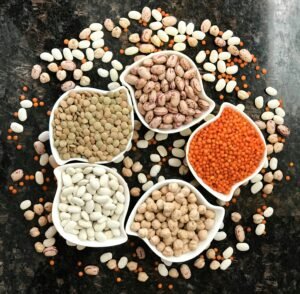
7. Eat enough fiber. Fiber slows digestion, helps stabilize blood sugar, feeds beneficial gut bacteria, and contributes significantly to feelings of fullness. Most women aren’t eating enough. Beans, lentils, vegetables, fruits, whole grains, nuts, and seeds are all excellent sources… and if you’re plant-based, you have a natural advantage here.
8. Reduce all-or-nothing thinking. This one might be the most underrated. The biggest obstacle to long-term progress for many women isn’t knowledge: it’s the tendency to swing between “being perfect” and “giving up completely.” One off-plan meal becomes a reason to write off the whole week. But real progress is built in the middle: through supportive habits repeated consistently, even imperfectly.
For a deeper look at daily habits that support weight loss during menopause, see: 11 Daily Habits for Weight Loss in Menopause.
A Note on Mindset: The All-or-Nothing Trap
Many women are exhausted from feeling like they have to do everything perfectly to make progress.
Track every calorie. Avoid every indulgence. Never miss a workout. Never have a bad week. Always stay disciplined.
But that standard isn’t just unrealistic; it’s actually counterproductive. Because when perfection is the bar, any stumble feels like total failure, and “failure” often leads to giving up entirely until the next fresh start.
Real life doesn’t work that way. There are birthdays and vacations, stressful seasons at work, weeks where sleep is terrible and motivation is nonexistent, and caregiving responsibilities that don’t pause for your wellness goals. That’s not an excuse… that’s just life.
Progress doesn’t require perfection. It requires consistency over time, with enough flexibility to bend without breaking.
If the way you’re thinking about food and your body is getting in the way of that kind of sustainable consistency, that’s worth exploring. Our article 5 Essential Mindset Shifts for Weight Loss in Menopause goes deeper on this.
And if you’re tired of treating the scale as the only measure of progress, STOP Measuring Progress on the Scale (Here’s Why!) offers a more complete perspective.
Getting Started: Free Resources
If you’re not sure where to begin, we’ve created a few free resources designed specifically for women navigating weight loss in midlife:
- Free Weight Loss Starter Guide for Menopause — a practical starting point for building sustainable habits
- Calorie Calculator for Hormonal Health & Fat Loss — a tool designed with menopause in mind
- Menopause Fat Loss Self-Assessment — to help you identify what’s working and what might need to shift
Frequently Asked Questions
Do calories still matter during menopause? Yes. Calories still matter because body weight is influenced by energy balance over time. However, menopause affects hunger, sleep, stress, muscle mass, and metabolism in ways that change how that equation feels in practice, making weight management more complex than simply “eating less.”
Does menopause slow your metabolism? Menopause and aging can contribute to a slower metabolism, but often not as dramatically as social media suggests. A significant portion of age-related metabolic slowdown is connected to muscle loss and reduced activity levels: both of which can be partially addressed through strength training and adequate protein intake.
Why is weight loss harder after 40? Weight loss after 40 tends to feel harder due to a combination of factors: declining estrogen, muscle loss, sleep disruption, changes in hunger hormones, insulin sensitivity shifts, and lower overall energy expenditure. Many women are also managing high levels of stress and caregiving responsibilities, which adds further complexity.
How much protein do women over 40 need? Protein needs vary based on body size, activity level, and health goals. However, many experts recommend that women over 40 prioritize protein more intentionally than they may have in the past, particularly to support muscle preservation, satiety, and recovery. See our detailed breakdown in How Much Protein Do Women Really Need After 40?
Does protein help with menopause weight loss? Protein can support menopause weight loss by increasing satiety, helping preserve muscle mass, stabilizing blood sugar and energy, and supporting recovery after exercise. It’s not a magic solution, but it’s one of the most consistently helpful dietary habits for women in midlife.
Is menopause weight gain inevitable? Body changes during menopause are common, but significant weight gain is not inevitable. Supportive habits (particularly strength training, adequate protein, regular walking, stress management, and good sleep) can help women manage their weight and feel stronger and healthier during midlife.
Does cortisol cause menopause weight gain? Chronic stress and elevated cortisol can influence appetite, cravings, sleep quality, and fat storage, all of which can make weight management harder. However, menopause weight gain is typically influenced by many factors working together, not cortisol alone.
Can you lose weight after menopause? Yes, many women can and do lose weight after menopause. It may require a more sustainable and supportive approach… one focused on muscle preservation, adequate nourishment, consistent movement, stress management, and realistic expectations, rather than aggressive restriction.
Have questions or want to share your experience? We’d love to hear from you.
Sources
- Harvard Health Publishing. “Outsmarting Perimenopause”
https://www.health.harvard.edu/womens-health/outsmarting-perimenopause - Harvard Health Publishing. “Menopause Symptoms That May Surprise You”
https://www.health.harvard.edu/womens-health/menopause-symptoms-that-may-surprise-you-what-to-watch-for-during-perimenopause - Harvard Health Publishing. “Too Little Sleep and Too Much Weight: A Dangerous Duo”
https://www.health.harvard.edu/blog/too-little-sleep-and-too-much-weight-a-dangerous-duo-201510078396 - Harvard Health Publishing. “Snooze More, Eat Less? Sleep Deprivation May Hamper Weight Control”
https://www.health.harvard.edu/blog/snooze-more-eat-less-sleep-deprivation-may-hamper-weight-control-202204042718 - The Menopause Society. “Midlife Weight Gain”
https://menopause.org/wp-content/uploads/for-women/MenoNote-Weight-Gain.pdf - Mayo Clinic. “The reality of menopause weight gain” https://www.mayoclinic.org/healthy-lifestyle/womens-health/in-depth/menopause-weight-gain/art-20046058
- Cleveland Clinic. “You Guessed It: Long-term Stress Can Make You Gain Weight” https://health.clevelandclinic.org/stress-and-weight-gain
Medical Disclaimer
Balanced by Plants is not a medical organization and does not provide medical advice, diagnosis, or treatment. The information on this website is intended for educational purposes only and is based on current scientific evidence from reputable health and nutrition sources. Always consult your healthcare provider before making changes to your diet, exercise routine, supplements, medications, or lifestyle.