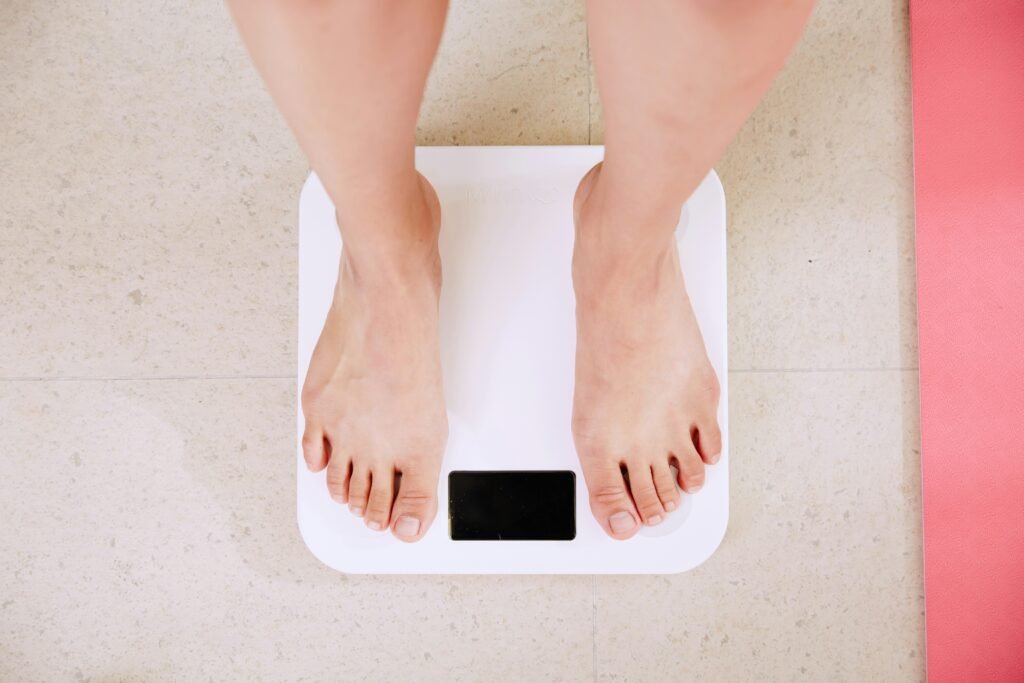
Let me guess, you’ve been consistent for weeks…lifting weights, walking, and tracking your meals…but no matter what you do, it still seems like the number on the scale just Will. Not. Budge. Perhaps it’s even gone up a little. Now you’re starting to think that all your efforts are for nothing, that nothing you do works, and you might as well just give up.
One of the most frustrating things women face as they age is the ease at which they accumulate extra body fat and how much more difficult it is to reduce it. If you’ve begun a new fitness and nutrition plan and it seems like the scale is not moving (despite your best efforts!), this is your sign to NOT GIVE UP! What you’re experiencing is completely normal and does not mean that what you’re doing isn’t working.
In this post, we’ll discuss what’s actually happening inside your body and explore other reliable ways to measure your progress.
Things to keep in mind as you read:
- It’s entirely possible to lose body fat in menopause.
- The scale is not a good indicator of fat loss.
- It is normal not to see the scale shift when you begin strength training.
- Your body likely is changing, but not in the way a scale can measure.
If you found this post, it’s likely you are on the brink of giving up because the number on the scale isn’t cooperating. You might still be stuck in the belief that the scale should show a drop to measure progress. Perhaps you have also nodded along to all the “don’t rely on the scale” advice, yet you find yourself still stepping on it looking for proof. We totally get it. We’ve been there too.
If you’ve been weight training and focusing on your nutrition, yet you still feel stuck…you’ll soon understand why the scale hasn’t moved and why this is actually the best indicator that things are actually headed in the right direction!
The Hard Truth: The Scale Moves Last
You’ve spent most of your life being told that weight loss is linear. Eat less, weigh less. Burn more calories, weigh less. Track harder, weigh less.
And maybe that worked when you were in your 20s and 30s. But after menopause, the rules change. Your hormones shift. Your muscle mass naturally declines. Your stress response is stronger, sleep becomes more fragile, and recovery takes longer.
None of this means weight loss is impossible. It simply means your body composition changes first, before you see a shift on the scale.
When you start lifting weights, especially if you’re new to it or returning after years, your body goes through a very predictable timeline. And it has nothing to do with the scale.
Women don’t quit because the results aren’t happening. They quit because they have never actually learned what to expect. So let’s fix that right now.
Weeks 0–4: The Recalibration Phase
These first few weeks feel the most confusing, not because you’re failing, but because your body is adapting.
During weeks 0–4:
- Your muscles pull in glycogen for the first time in years
- Glycogen comes with water (may increase the number on the scale)
- You may feel puffy or “swollen”
- Inflammation bumps up temporarily
- You’re building the foundation to actually burn fat
You aren’t “gaining weight.” This is your body turning the lights back on.
If you quit now, you stop right before the magic begins.
Weeks 4–8: The Alignment Phase
This is when strength training starts to “click.”
- Your nervous system fires better
- Movements feel smoother
- Stress and insulin stabilize
- Hunger cues become more predictable
- Fat loss begins, but it’s quiet and internal
Here’s the important thing to remember:
Your measurements drop before the number on the scale does.
If you’re not measuring, you might think nothing is happening.
You might think you’re stuck and failing. This leads to quitting before giving it a real chance.
Just remember, behind the scenes your body is finally working with you instead of against you!
Weeks 8–16: The Recomposition Phase
This is where you SEE it.
- Clothes fit differently
- Your waist trims down
- Arms look tighter
- Your legs change shape
- You feel firmer and more lifted
Here’s the kicker:
Muscle density replaces lost fat. On the scale, that often looks like “no change.” But your body is changing dramatically, just in ways that numbers on a scale cannot reflect.
Most women lose body fat during this phase while gaining muscle at the same time. That’s why the scale doesn’t seem to move much, if at all. This doesn’t mean you’re stuck; it means your body is doing exactly what you want it to do.
When you lift weights and build muscle, you look smaller, tighter, and more defined. You burn more calories and age slower.
Since one pound of muscle takes up less space than one pound of fat, your weight may not change much, but your body composition will. Rather than focusing on meeting your “goal weight,” focus on your health goals like staying active and fueling with the right nutrition.
📏 How to Truly Measure Your Progress
If you’re relying on the scale alone, you will miss 95% of the progress you’re making.
Here’s how to measure the results that actually matter:
- Take measurements of your waist, hips, thighs, and bust/ribcage every 2-4 weeks
- Take progress photos every 4-8 weeks
- Acknowledge how your clothes are fitting after the first month or two
- Document strength increases
- Notice energy improvements and hunger stability over time
- Make note of mood changes and differences in bloating
Tracking all of this will reflect progress long before the scale ever does.
💛 Your Real Takeaway: Trust the Timeline
Weeks 1–4 build the foundation.
Weeks 5–8 create internal change.
Weeks 9–16 reveal visible transformation.
If the scale isn’t moving, good. That means your body is recomposing…losing fat and gaining muscle at the same time!
Stay consistent by lifting weights, walking daily, eating enough protein and calories, getting plenty of rest, and managing your stress properly.
Always keep this in mind:
You’re not stuck. You’re not failing.
You’re adapting.
Need more reassurance? Take our Menopause Fat Loss Self-Assessment to check in with yourself and see if you are on the right track. This can help you determine what’s working and what areas may need to be tweaked to really amp up your results.
For more menopause resources, visit our Quick Start page. There you’ll find free articles and information to guide you as you navigate weight loss in your 40s, 50s, and beyond!