Why Protein Needs Can Feel Confusing
If you’ve researched how much protein to eat, you’ve probably seen very different recommendations:
- Fitness spaces recommending 130–180 grams a day
- Plant-based organizations like PCRM noting that many women meet their basic needs with a varied diet
It’s easy to feel stuck somewhere in the middle wondering:
“So… what does that mean for me?”
Starting with the Basics
The Physicians Committee for Responsible Medicine (PCRM) uses a general guideline of about 0.36 grams of protein per pound of body weight (0.8 g/kg), which works out to roughly 50-60 grams per day for many women.
This is a helpful starting point and is designed to meet basic nutritional needs for overall health.
From there, protein needs can vary based on your body, your activity level, and what you’re trying to achieve.
Where Needs Can Shift in Midlife
For many women in perimenopause and postmenopause, especially those including strength training, even a few times per week, slightly higher protein intakes can be supportive.
This can help with:
- Maintaining and building lean muscle
- Supporting metabolic health
- Staying fuller between meals
- navigating age-related muscle changes
The Balanced by Plant’s Range
For most women in midlife who exercise a few times per week:
We like to aim for 0.55 to 0.73 grams of protein per pound of body weight
(roughly 1.2–1.6 grams per kilogram of body weight)
This range is practical, well-supported by research, and aligns with goals like steady strength improvements, fat loss, and muscle maintenance.
- Lower end (0.55 grams per pound (or 1.2 g per kg): Supports healthy muscle maintenance and metabolic health.
- Upper end (0.73 grams per pound (or 1.6 g per kg): Hits the “sweet spot” for optimizing muscle retention and strength gains during weight loss.
Why We Keep It This Range
You may also see higher targets recommended, especially in fitness spaces. For most midlife women, though, we find this range strikes the right balance. Here’s why:
- Diminishing returns: Research shows muscle-building benefits plateau around 0.73 g per pound a day (1.6 g per kg a day). Going beyond that yields minimal additional benefit.
- Sustainability matters: Very high-protein diets can crowd out other nutrient-dense, plant-based foods your body needs.
- What’s Practical for Real Life: For women exercising moderately and prioritizing sustainable fat loss, staying within 0.55–0.73 g per pound a day is both realistic and effective.
Per-Meal Protein Targets
Research suggests that spreading protein evenly across meals is best for muscle maintenance and metabolism.
- A good goal to have is 20-30 grams per meal
- Space protein intake across 3 or 4 meals per day
- Focus on wholesome plant-based sources:
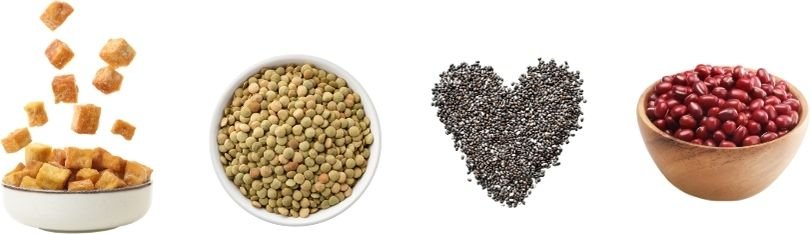
- Tofu, tempeh, seitan
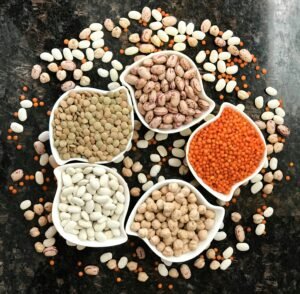
- Lentils, beans, chickpeas
- Edamame, soy milk, soy yogurts
- Quinoa, hemp seeds, pumpkin seeds
- Use smoothies or protein powders to supplement if needed
The Balanced by Plants Approach
Our recipes are designed around evidence-based recommendations for women in midlife. Our goal isn’t to push extreme numbers or rigid targets. It’s to help you eat in a way that helps you stay consistent over time, supports your body through midlife, and feels satisfying and realistic.
Disclaimer
Balanced by Plants is not a medical organization and does not provide medical advice, diagnosis, or treatment. This content is for educational purposes only and based on current scientific evidence and expert consensus. Always consult your healthcare provider before making changes to your diet or lifestyle.
Key Sources
International Society of Sports Nutrition (ISSN) Position Stand: Protein & Exercise
R. Jäger et al., Journal of the International Society of Sports Nutrition, 2017.
See ISSN Position Stand
Morton RW et al., 2018 — Meta-analysis on Protein & Resistance Training
Read on PubMed
PROT-AGE Study Group, 2013 — Protein Intake Recommendations for Older Adults
Read on PubMed